The strategic landscape of the Middle East is undeniably complex, shaped by a confluence of historical rivalries, geopolitical ambitions, and a rapidly evolving military technological environment. Central to this dynamic is the escalating proliferation of missile capabilities, presenting an acute challenge to regional stability and demanding robust responses in the form of advanced Middle East missile defenses. While much international attention often focuses on Iran's missile program, painting it as the primary antagonist, a deeper look reveals a far more intricate picture where numerous regional actors possess and are actively developing sophisticated missile systems. This widespread proliferation necessitates a comprehensive understanding of both the offensive threat and the defensive strategies employed to mitigate it, highlighting the critical importance of effective middle east missile defenses.
The Expanding Shadow: Beyond Iran's Missile Capabilities
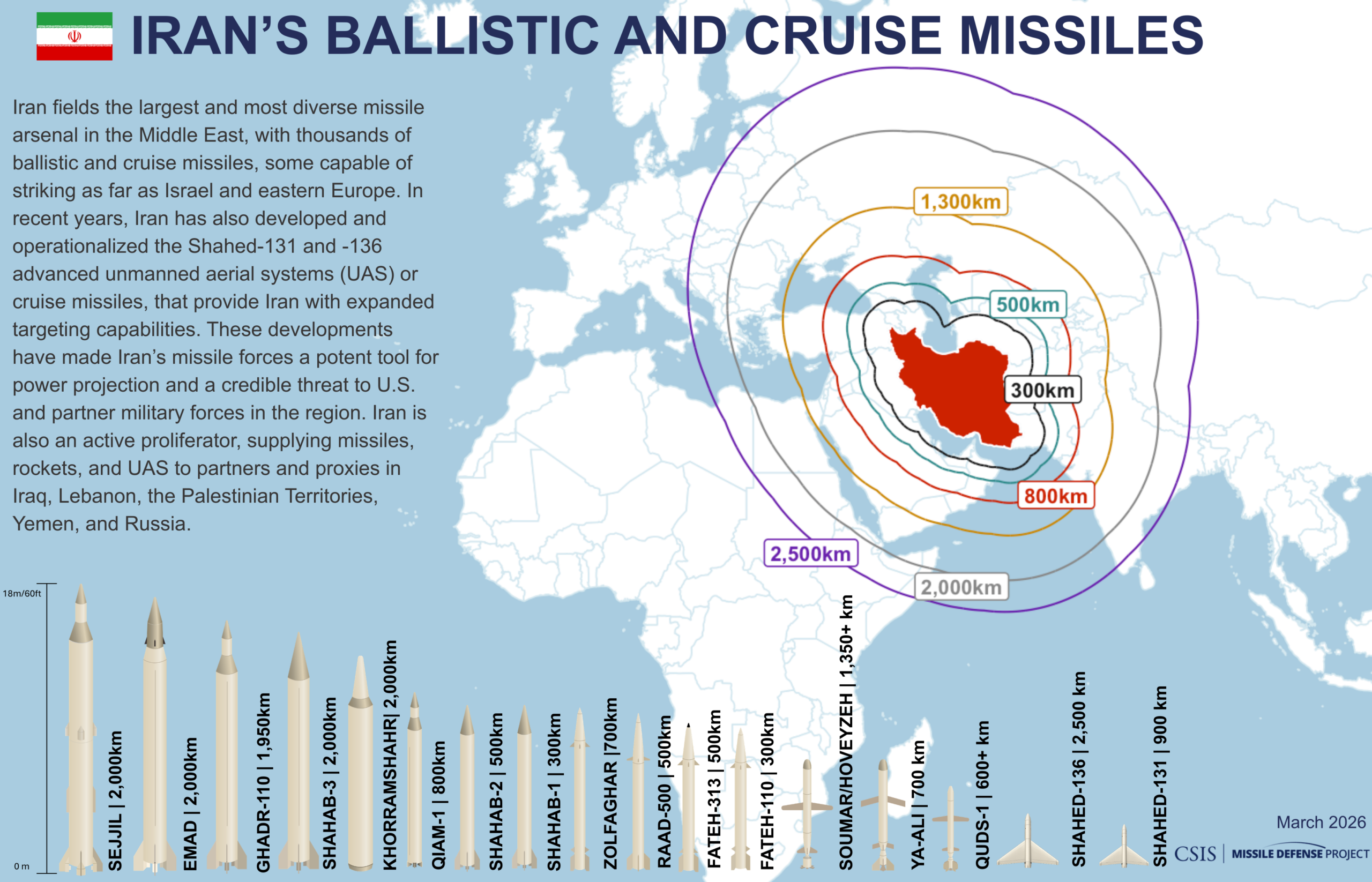
For decades, the narrative surrounding missile proliferation in the Middle East has often been dominated by concerns over Iran’s growing arsenal. Indeed, Iran's development of ballistic and cruise missiles, coupled with its willingness to transfer these systems to proxies and allies, has been a consistent point of contention, particularly in debates surrounding diplomatic efforts like the Joint Comprehensive Plan of Action (JCPOA). However, it is crucial to recognize that Iran's program does not exist in a vacuum; it is merely one piece of a much larger, decades-long regional arms race.
The pursuit of long-range missile capabilities began much earlier in the region, with Israel and Egypt pioneering their development. Iran’s own program, ironically, gained significant impetus during the "War of the Cities" in the 1980s, when Iraq launched missiles against Iranian urban centers. Today, the landscape is dramatically different. Iran is just one of at least eleven countries in the region possessing long-range missiles – systems that either approach or exceed the Missile Technology Control Regime (MTCR) Category I threshold. These nations include Bahrain, Egypt, Iran, Israel, Qatar, Saudi Arabia, Syria, Turkey, the United Arab Emirates, and Yemen.
The evolution of these capabilities is also noteworthy. While many early systems were imported, a significant trend towards indigenous development is evident. Six of these eleven countries either possess or are actively developing domestic manufacturing capabilities for their missile programs. Iran, for instance, initially relied on imported Scud missiles from North Korea but has since transitioned to deploying a new generation of solid-fueled ballistic missiles designed and produced entirely within the country. The unveiling of systems like the 1,000 km range Dezful in 2019 underscores this indigenous capability, which Iranian leaders view as a critical element of national power and a deterrent against external threats. To understand the broader context of this issue, delve deeper into Middle East Missile Proliferation: Beyond Iran's Program, and for a specific look at Iran's journey, explore Iran's Evolving Missile Program: From Imports to Regional Power.
Understanding the Drivers of Middle East Missile Proliferation
The pervasive spread of missile technology across the Middle East is not merely a consequence of technological availability but a complex interplay of strategic motivations. At its heart lies the concept of the "security dilemma," where one state's efforts to enhance its security are perceived as a threat by others, prompting them to take similar measures. This often leads to an arms race, where each nation seeks to deter potential adversaries or gain a strategic advantage.
Key drivers include:
- Deterrence: For many states, missiles, especially ballistic missiles, are seen as a vital deterrent, capable of striking deep into enemy territory and inflicting significant damage. This capability is particularly attractive for nations that perceive a conventional military disadvantage.
- Regional Rivalries: Long-standing geopolitical rivalries – such as those between Iran and Saudi Arabia, or between various states and non-state actors – fuel the demand for offensive weaponry. Missiles become tools of power projection and instruments of asymmetric warfare.
- Technological Transfer and Indigenous Development: The global marketplace for missile technology, both overt and covert, has facilitated proliferation. Furthermore, the increasing ability of regional powers to reverse-engineer imported systems and develop their own manufacturing capabilities accelerates the trend, reducing reliance on external suppliers.
- Perception of Threat: The perceived threat from neighbors or external powers directly correlates with the motivation to acquire and develop advanced missile systems. Iran's program, for example, is often described by its leaders as a response to Western pressures and a necessary component for safeguarding national interests.
- Non-State Actor Empowerment: The transfer of missile technology to non-state actors, as seen with Iranian proxies in Yemen launching missiles at Saudi Arabia, further complicates the security environment. These groups introduce unpredictable elements and make attribution and response more challenging.
This intricate web of motivations underscores why tackling middle east missile proliferation is far more than a technical challenge; it's a profound geopolitical one.
The Imperative for Robust Middle East Missile Defenses
In the face of such widespread proliferation, the development and deployment of robust Middle East missile defenses have become an absolute imperative for regional stability. Nations across the region are investing heavily in multi-layered air and missile defense systems, often with significant international cooperation, particularly from the United States.
Israel's Advanced Systems: Israel stands out with some of the world's most sophisticated and battle-tested missile defense systems. Its multi-tiered approach includes:
- Iron Dome: A highly effective short-range rocket interceptor system, in service since 2011, designed to protect urban areas from short-range rockets and artillery shells.
- David's Sling: An intermediate-range system designed to intercept tactical ballistic missiles, large-caliber rockets, and cruise missiles.
- Arrow (Arrow 2 and Arrow 3): Long-range ballistic missile defense systems designed to intercept missiles outside the Earth's atmosphere, offering protection against strategic threats.
- Iron Beam: Its newest weapon, a directed-energy laser system, which promises a cost-effective solution for intercepting various threats, though still in its early stages of deployment.
Other Regional Defenses: Other nations in the region, such as Saudi Arabia, the UAE, and Qatar, heavily rely on advanced imported systems, primarily the US-made Patriot missile defense system, supplemented by other radar and interception technologies. These systems offer crucial protection against ballistic missiles and aircraft, forming the backbone of their air defense capabilities. The integration of advanced radar, command and control systems, and interoperability with allied forces are vital components of these comprehensive defense architectures.
Challenges and Future Outlook for Middle East Missile Defenses
Despite significant investments and technological advancements, middle east missile defenses face substantial challenges that highlight the continuous arms race between offensive and defensive capabilities. The notion that interceptors are not foolproof is a harsh reality that demands constant innovation and adaptation.
Key challenges include:
- Saturation Attacks: Even the most advanced systems can be overwhelmed by a large volley of missiles or drones, making it difficult to intercept every incoming threat. This is a critical tactic for adversaries aiming to breach defenses.
- Evolving Threat Landscape: The development of hypersonic missiles, stealthy cruise missiles, and swarm drone attacks presents new layers of complexity that challenge traditional radar and interception methods. The increasing integration of drones with missile strikes adds another dimension to the defensive equation.
- Cost and Sustainability: Interceptor missiles are incredibly expensive. The cost-effectiveness of shooting down cheap, mass-produced drones or rockets with multi-million dollar interceptors is a major concern for long-term sustainability.
- Short Warning Times: The geographical proximity of potential adversaries means extremely short warning times for defensive systems, demanding instantaneous detection and response capabilities.
- Integration and Interoperability: Building truly comprehensive multi-layered defenses requires seamless integration of various systems from different manufacturers and, often, across different national forces. Ensuring interoperability is crucial for a cohesive regional defensive posture.
The future of middle east missile defenses will likely involve a multi-pronged approach: continued investment in advanced interceptor technology (including directed energy weapons like lasers), enhanced intelligence, surveillance, and reconnaissance (ISR) capabilities for early warning, and a stronger emphasis on integrated air and missile defense (IAMD) systems that can detect and engage a wide spectrum of threats. Furthermore, diplomatic efforts to curb proliferation, though often fraught with difficulty, remain a critical component of any comprehensive strategy to enhance regional security.
The widespread proliferation of missile capabilities across the Middle East presents a formidable and evolving challenge, underscoring the critical need for robust and adaptable defense systems. While Iran's missile program undeniably represents a significant concern, it is part of a broader regional dynamic involving numerous actors, each with their own motivations for acquiring such power. The effectiveness of Middle East missile defenses, from Israel's Iron Dome to other nations' Patriot systems, is continually tested by the development of new offensive technologies and tactics. A truly secure future for the region will require not only continued investment in advanced defensive technologies but also persistent diplomatic engagement to address the root causes of proliferation, fostering a more stable environment where the shadow of missiles does not dictate the future.