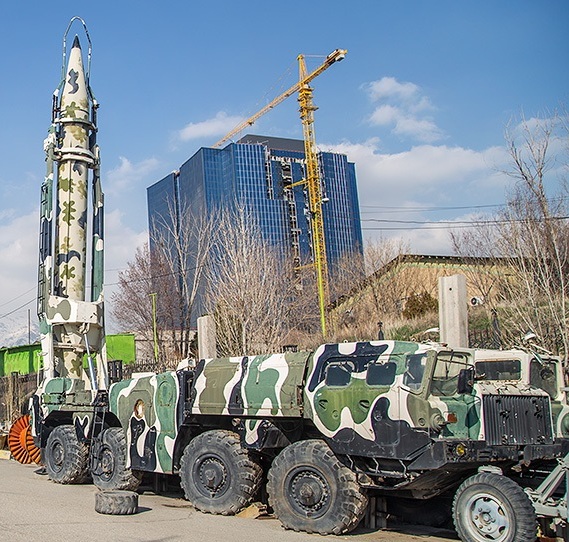
Iran's Evolving Missile Program: From Imports to Regional Power
For many observers, Iran's ballistic and cruise missile programs are a focal point when discussing geopolitical tensions in the Middle East. They frequently surface in debates surrounding international diplomacy, particularly concerning efforts to constrain Iran's nuclear ambitions. Critics of agreements like the Joint Comprehensive Plan of Action (JCPOA) often lament the perceived omission of missile constraints, arguing that such programs represent a significant threat to regional stability. Indeed, the proliferation of advanced missile technology is a defining characteristic of the modern Middle East missile landscape, and Iran stands as a prominent, self-sufficient player.
While the spotlight often shines brightest on Tehran, it's crucial to understand that Iran's missile development does not exist in a vacuum. It is part of a broader, decades-long regional arms race where numerous states have acquired and developed similar capabilities. This article delves into the evolution of Iran's missile program, charting its course from initial reliance on foreign imports to its current status as a formidable regional power capable of indigenous design and manufacturing, and examines the implications for regional security.
The Genesis of Iran's Missile Ambitions: From Necessity to Development
Iran's journey into the world of long-range missiles was not initiated out of a pre-existing ambition for offensive capabilities, but rather as a direct response to existential threats. Unlike Israel and Egypt, which were early pioneers in pursuing long-range ballistic missiles within the region, Iran's program was largely kickstarted by the brutal realities of the Iran-Iraq War in the 1980s. During the infamous "War of the Cities," Iraqi forces launched missiles at Tehran and other Iranian urban centers, inflicting immense casualties and psychological trauma. This experience underscored a critical vulnerability for Iran, driving home the urgent need for a deterrent and retaliatory capability.
In the immediate aftermath, Iran's primary objective was to acquire any available missile technology, leading to imports, most notably Scud missiles from North Korea. These early acquisitions were rudimentary but served a vital purpose: to provide Iran with at least a symbolic counter-strike capability. This period laid the foundational knowledge and strategic impetus for what would later become a sophisticated, domestically driven missile enterprise.
Domestic Ingenuity: Iran's Shift from Imports to Self-Sufficiency
Sanctions and a strategic imperative for autonomy quickly pushed Iran beyond mere import reliance. Faced with international restrictions on arms transfers, Iran embarked on an ambitious program to indigenize its missile technology. This shift has been profound, transforming Iran from a recipient of foreign missile systems into a nation capable of designing, developing, and manufacturing its own sophisticated arsenal.
In recent years, Iran has unveiled a new generation of solid-fueled ballistic missiles, a significant technological leap from its liquid-fueled predecessors. Solid-fueled missiles offer considerable advantages, including faster deployment, easier storage, and reduced pre-launch vulnerability, making them a more credible deterrent. Notable among these advancements was the unveiling of the Dezful, a 1,000 km long-range ballistic missile, in February 2019. This missile, along with a series of other advanced systems and underground production facilities, signals a deep commitment to missile self-sufficiency.
The former Commander of the Iranian Revolutionary Guards Corps (IRGC), Major General Mohammad Ali Jafari, explicitly linked these developments to Iran's defiance of international pressure, describing the Dezful as "an answer to Westerners… who think they can stop us from reaching our goals through sanctions and threats." This sentiment highlights a core tenet of Iran's missile strategy: to leverage domestic capabilities as a symbol of sovereignty and a tool to project power despite external constraints.
Iran is not alone in this pursuit of indigenous capabilities. It is one of six countries in the region that either possess or are actively developing domestic missile manufacturing capabilities, among the eleven regional states possessing long-range missiles that approach or exceed the Missile Technology Control Regime (MTCR) Category I threshold. This widespread domestic production capability signifies a persistent and growing challenge to regional stability, as nations are less reliant on external suppliers.
Regional Reach and Escalation: Proxies, Proliferation, and Power Projection
Iran's missile program has transcended national defense to become a critical component of its regional foreign policy and power projection. Tehran has demonstrated a clear willingness to transfer missile technology and systems to its regional allies and proxy groups, extending its strategic reach and creating a complex network of threats across the Middle East. This proliferation has had tangible consequences, directly impacting regional stability and security dynamics.
Instances of Iran's missile program influencing regional conflicts include:
- Strikes in Syria: Iran has utilized ballistic missiles to strike targets in Syria on at least two documented occasions, demonstrating its capacity for precision strikes against perceived threats.
- Attacks on Saudi Arabia: Iranian-produced missiles have been fired by Houthi proxies in Yemen at Riyadh, the Saudi capital, and other targets. These attacks underscore the reach of Iranian influence and the dangers of missile proliferation to non-state actors.
- Deterrence and Asymmetrical Warfare: For Iran, missiles serve as a powerful tool for asymmetrical deterrence against more technologically advanced adversaries. They enable Tehran to threaten vital infrastructure, military bases, and population centers, complicating any potential military action against it.
The transfer of these capabilities creates a multi-layered security challenge, where states and non-state actors alike possess the means to inflict significant damage, further destabilizing an already volatile region. This aspect of Iran's program, in particular, raises significant international concern regarding its potential for escalation and wider conflict.
The Challenge to Regional Defenses and Stability
The expansion and sophistication of Iran's missile arsenal, coupled with its regional proliferation, pose profound challenges to existing missile defense systems and regional stability. Countries like Israel, which has a long history of dealing with rocket and missile threats, have invested heavily in multi-layered defense architectures. Israel’s sophisticated systems include:
- Iron Dome: A short-range rocket interceptor system, operational since 2011, primarily designed to counter threats like those from Hamas and Hezbollah.
- David's Sling: A medium-range interceptor system designed to counter tactical ballistic missiles and cruise missiles.
- Arrow Systems (Arrow 2 & Arrow 3): Longer-range systems designed to intercept ballistic missiles outside the atmosphere, targeting more strategic threats.
- Iron Beam: A nascent laser-based system intended to intercept short-range rockets, artillery, and mortars, offering a potentially more cost-effective solution for lower-end threats.
Despite these advanced capabilities, interceptor systems are not foolproof. They have limitations in capacity, range, and the ability to counter saturation attacks or evade sophisticated countermeasures. The sheer volume and diversity of missile threats, including those from Iran's growing indigenous capabilities and its proxies, present a formidable challenge to even the most advanced defenses. The effectiveness of these defenses against a widespread Middle East missile threat is constantly being tested, pushing the boundaries of technological innovation and strategic planning.
This dynamic creates a precarious balance of power, where offensive capabilities continue to evolve rapidly, often outpacing defensive advancements. The increasing precision and reach of modern missiles mean that once-distant threats are now within striking range, demanding constant vigilance and robust diplomatic efforts to de-escalate tensions.
Conclusion: Navigating the Complex Middle East Missile Landscape
Iran's evolving missile program represents a significant and undeniable factor in the complex security equation of the Middle East. What began as a defensive necessity born from conflict has matured into a sophisticated, indigenously developed arsenal that serves as a cornerstone of Iran's strategic deterrence and regional power projection. This transformation, marked by a decisive shift from reliance on foreign imports to robust domestic manufacturing, underscores Iran's determination to maintain strategic autonomy in a volatile region.
However, Iran's program does not exist in isolation. It is an integral, albeit prominent, part of a wider regional missile proliferation trend, where numerous countries possess or are developing long-range missile capabilities. This widespread access to advanced weaponry, combined with Iran's willingness to transfer technology to its proxies, creates a highly unstable environment. It challenges regional defense architectures and elevates the risk of escalation, making diplomatic engagement and de-escalation mechanisms more critical than ever to prevent a devastating middle east missile confrontation.